Most buyers who regret a North Austin, TX suburb didn't pick a bad city. They bought the reputation instead of the actual address. Georgetown, Leander, Round Rock, Cedar Park, and Hutto all deliver on what they're known for, but each one hides a trade-off that never shows up on a listing and always shows up the first week you live there.
I've seen buyers fall in love with all 5 of these cities, only to realize after moving in they picked the wrong one. You pick the quiet suburb and find out it's a regional hub with 8 AM traffic. You buy for the easy highway access and hear the highway from your back patio. You land close to everything and pay a toll twice a day to get it.
Key takeaways
- In Georgetown, the square and Wolf Ranch both back up at the exact times you'd want to use them, and new neighborhoods along Highway 29 still sit a real drive from groceries and gas.
- In Leander, the same 183 and 183A access that makes commuting easy can mean highway noise and backups, so judge each lot in person on a weekday evening.
- Round Rock is a regional hub, not a sleepy suburb, so quiet streets inside a subdivision can still open onto I-35 and University Boulevard traffic at 8 AM.
- In Cedar Park, the fast route is the 183 toll, and the free 183A frontage lanes aren't projected to be fully complete until around 2029.
- Hutto has the lowest prices of the 5, generally from the upper 200s into the low to mid 400s as of November 12, 2026, in exchange for a few years of construction.
Why do buyers regret Georgetown, TX?
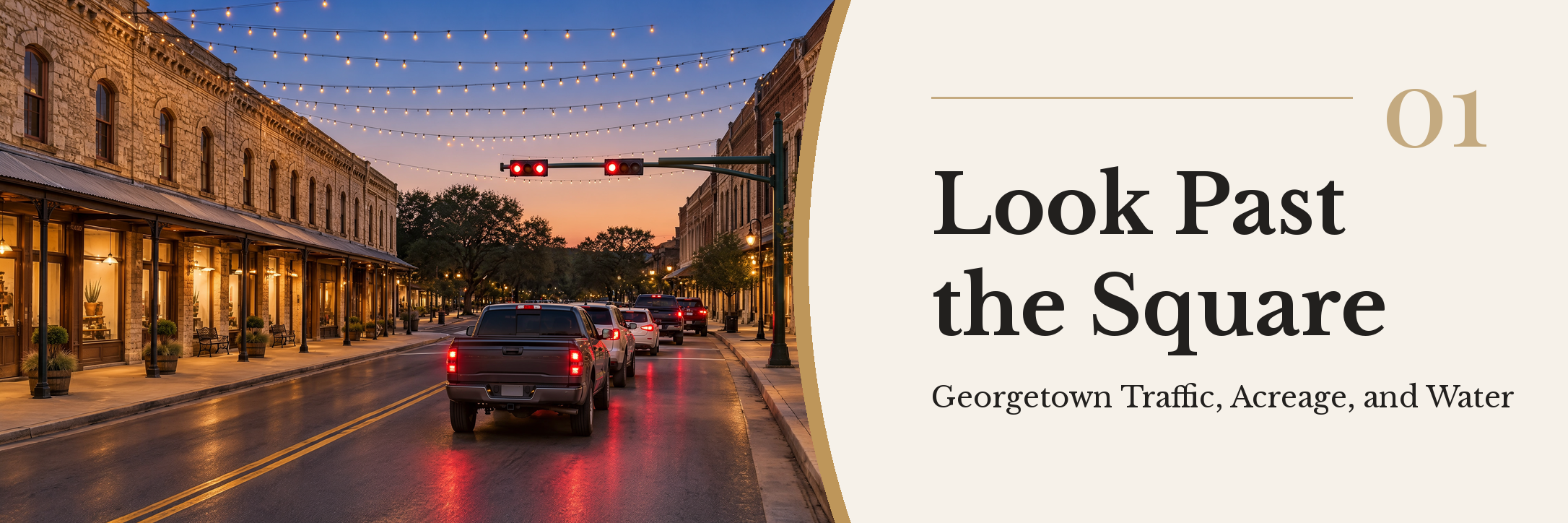
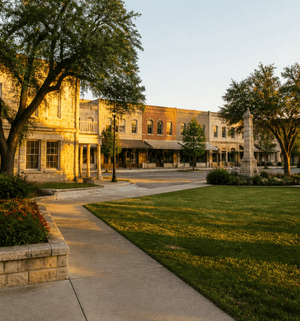
Georgetown gets picked for its historic square, and the reputation is earned. The square is one of the best in the state, with string lights, a packed calendar of festivals, live music, and plenty of restaurants. Add Wolf Ranch a few minutes away for your Target run and your grocery run, and it looks like the complete package.
What nobody mentions is that the roads never caught up to how fast the city grew. Wolf Ranch and the square both back up badly at the exact times you'd want to use them. As of November 12, 2026, stretches of Williams Drive, Ronald Reagan Boulevard, and the roads connecting those 2 areas are still under construction.
To be fair, the city isn't sitting on its hands. Wolf Ranch Parkway is in the middle of a widening project, and improvements along Austin Avenue are moving forward at the same time. Both are aimed at the bottlenecks buyers complain about most. Some of the disruption you'd deal with moving in this year is temporary construction pain, but the demand driving it isn't going anywhere.
Does every Georgetown address deal with the same traffic?
No. A house close to downtown might have walkable access to the square, the Blue Hole, and the trails along the San Gabriel River without ever touching I-35. A house out past Wolf Ranch or near Sun City, Georgetown's big 55 and older community, gives you a different version of the same city, with its own amenities and its own distance from downtown.
The reputation is valid. Whether your specific address gets to cash in on it is a completely separate question.
What happens along Highway 29 toward Liberty Hill and Leander?
The pattern flips. It's one new construction neighborhood after another with almost nothing in between: no grocery store, no gas station, and no doctor's office without a real drive. Any errand that isn't already in your kitchen means driving back through downtown or down toward Round Rock.
Not long before this video went up on November 12, 2026, I was at a builder event out that way, walking a community offering a $25,000 incentive just to get buyers through the door. These builders are getting desperate to get buyers in. The rooftops show up first, and the daily infrastructure is still catching up.
What does an acreage lot in Georgetown really come with?
Georgetown can absolutely deliver an acre or two and some peace and quiet, especially on the outer edges of the city. But the acreage comes with its own job description:
- A well instead of city water
- A septic system that needs its own maintenance contract, not just an inspection at closing
- Fence lines, brush, and drainage
- A lawn that stops feeling charming the third weekend in a row you're out mowing in July
The city's own water utility says outdoor irrigation eats up about 60 to 70% of treated water use in the hotter months. That big, beautiful lawn means a real irrigation bill and watering restrictions you'll have to follow. And once the sun goes down, downtown is still the main gathering spot, which only helps if something's happening the night you're free.
Why do buyers regret Leander, TX?
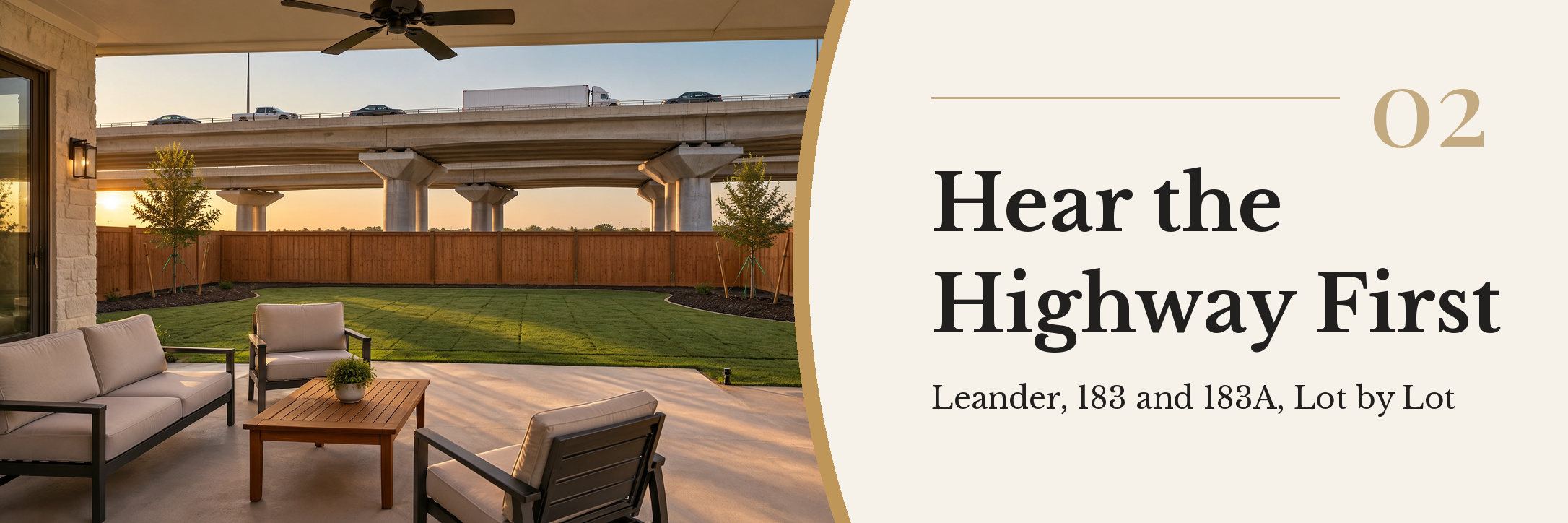
In Leander, the selling point and the catch are the same thing: the highway access. US 183 and the 183A toll road run straight through the city, and most neighborhoods sit close enough to one of them for an easy commute into Austin or Cedar Park.
Those same neighborhoods can also sit close enough to hear the traffic and deal with backups at the entrances and exits on any weekday morning. The extension that opened last year pushed the toll road further north past Highway 29. That helps if you're commuting down from Liberty Hill, and it isn't as great if you end up on the lot closest to the new lanes.
Why does the drive time estimate miss the real commute?
Because the traffic doesn't start at the highway. Roads like Hero Way, San Gabriel Parkway, and Crystal Falls Parkway collect traffic from several subdivisions before it ever reaches 183 or 183A. Even getting to the highway can mean a few stop signs in a school zone first, and none of that shows up in a drive time pulled from an address on a map.
Travisso and Crystal Falls offer rolling Hill Country lots and more space between neighbors, at a premium over mainstream pricing. You gain distance from the highway noise, but you don't get a shorter commute. The trip from a lot deep inside the community back out to 183 can take a lot longer than the marketing suggests, because that estimate may start at the front gate.
Is every Leander lot near 183A loud?
No. Not every lot facing 183A is unbearable, and some homeowners may not notice at all. Sound walls cover some of the most exposed stretches. Grading and landscaping help, and a lot tucked into a subdivision away from a direct view of the road is different from one backing straight up to it.
Leander isn't loud everywhere, but a map radius won't tell you which kind of lot you're buying. Standing on the property on a weekday evening gives you a much better idea.
What is day-to-day life like in Leander?
Easy. Groceries, basic services, and even an around-the-clock emergency care center near San Gabriel Parkway are all close by. The nightlife and entertainment scene is still limited, though. A concert, a festival, or a Friday night out beyond the chain restaurants means driving to Georgetown, Round Rock, or all the way into Austin.
Northline should bring more of that to the area. The project is already taking shape, but there's still a long way to go before it feels like a finished downtown. If a good Friday means dinner on your patio in a quiet neighborhood, Leander delivers. If you expect more to do close to home, you'll be driving for it, and that's easier to plan around before the moving truck shows up than after.
Why do buyers regret Round Rock, TX?
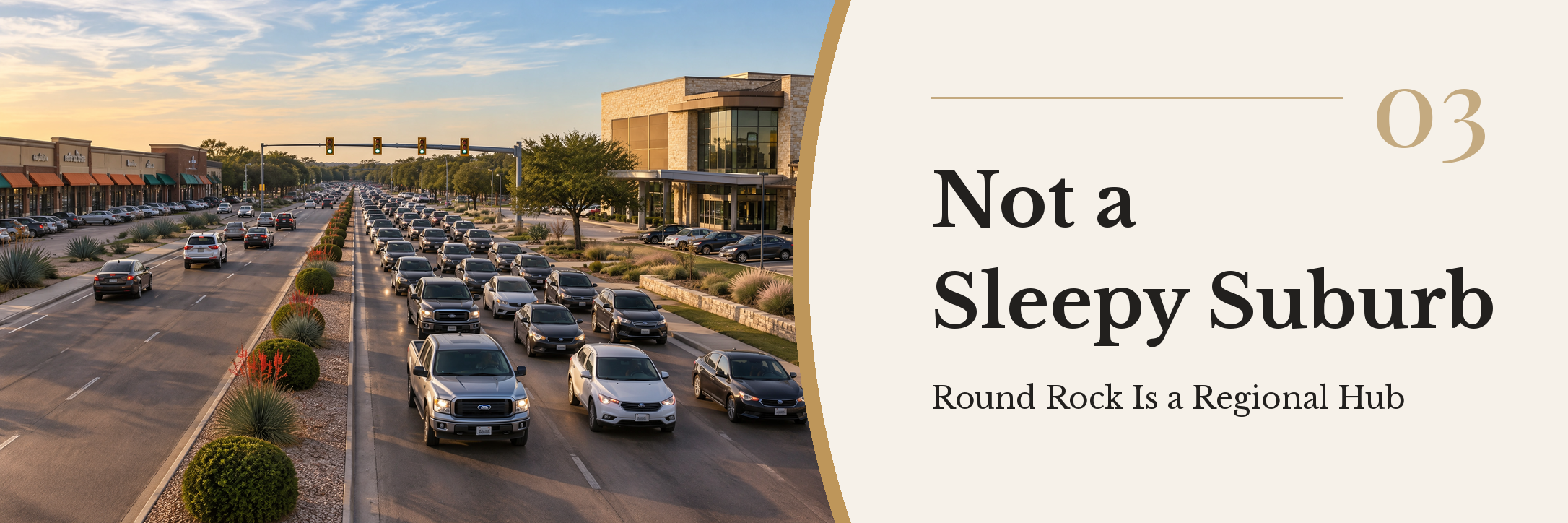
Round Rock might be the most misleading name on this list. Buyers hear "suburb" and picture something this city was never built to be. Round Rock is the most established, most built out, most live-in city of the 5, and that's exactly why buyers assume it's the sleepy option next to a faster-growing neighbor.
It actually works as its own regional hub:
- Dell headquarters is here
- Hospitals and medical offices line the major roads
- Dell Diamond and Old Settlers Park bring in tournament crowds and concerts throughout the year
- The Round Rock Express in season, Kalahari Resorts conference traffic, and a full calendar of music and events downtown
That's a big part of the appeal, and a big part of the traffic. Round Rock gives you plenty of reasons not to drive into Austin, while employees, patients, shoppers, and tournament families drive in from somewhere else to use those same places.
Where does Round Rock traffic hit hardest?
The moment you leave the subdivision. Individual neighborhoods can be calm, with mature trees and quiet streets. Step out onto the main roads at 8 AM on a Tuesday and you get I-35 traffic plus arterial roads carrying school runs, commuters, and retail trips all at once.
University Boulevard is the clearest example. It carries medical, retail, and residential traffic on the same stretch throughout the day, not only at rush hour. A.W. Grimes does something similar on the east side, carrying local and commuter traffic on one road that was built years before much of Round Rock existed.
Is Round Rock fixing its roads?
Yes. As of November 12, 2026, the city has a few hundred million dollars in road projects underway, because the traffic pressure is real. The Wyoming Springs extension on the west side is set to open around the end of 2026, adding another north-south route built to take pressure off Old Settlers Boulevard and Sam Bass Road. A long list of similar projects is under construction across the city.
This isn't only a Round Rock problem. Georgetown has its own version around the square and Wolf Ranch. In Round Rock it spreads more evenly, because more places pull people in from outside, including hospitals, jobs, tournaments, and outlet shopping.
Round Rock is family-friendly and convenient, with almost everything you need inside city limits. If quiet means low traffic to you, you may be disappointed. Most buyers are glad they made that trade once they know what to expect.
Why do buyers regret Cedar Park, TX?
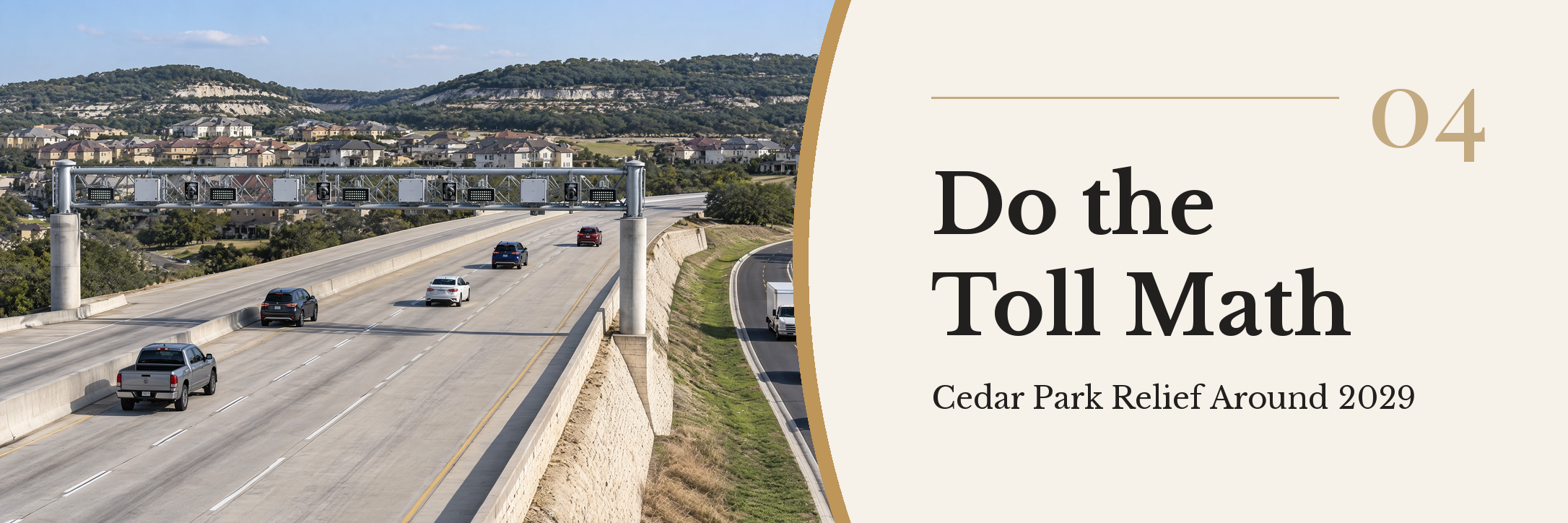
Two roads explain Cedar Park. As of November 12, 2026, Parmer Lane narrows from 6 lanes to 4 around State Highway 45 North, well before it reaches the Cedar Park city line, and that 4-lane stretch carries around 38,000 cars a day. Head east, and Whitestone Boulevard near its intersection with 183 carries close to 50,000 vehicles a day.
Put those 2 together and you get a real bottleneck, with regional traffic moving through because there aren't many other north-south options in this part of the metro.
Will you need the toll road in Cedar Park?
If you want the fast way through, usually yes. The fast way through most of that stretch is the 183 toll, and the free alternative takes a lot longer during peak hours. Buyers who don't factor a toll tag into their monthly cost get a real surprise on their first commute.
Run that toll twice a day, 5 days a week, for 2 commuters in the same household, and you've got a recurring expense that never showed up on a listing sheet. Bell Boulevard, the old US 183 route through town, is still there and still free, with signals, driveways, and left turns all along the way. It works fine if your destination is on Bell Boulevard itself. Once your trip runs longer than that, 183 starts looking better, and that's where your toll tag earns its keep.
When is traffic relief coming to Cedar Park?
Relief is coming, and the timeline is the catch. The Texas Department of Transportation is building a non-toll frontage road alongside 183A with 2 free lanes in each direction between Whitestone Boulevard and Avery Ranch Boulevard, plus a path for biking or walking. Construction has been underway since 2025, and as of November 12, 2026, current projections put full completion around 2029.
The state has already put real work in. The intersection where Parmer meets Whitestone is built to handle the heaviest turns better than a standard signal, and the regional planning agency keeps studying this stretch because demand keeps climbing. That study matters, but it isn't a funded widening project yet, which is worth knowing if you're deciding whether to buy now or wait.
Is Cedar Park still a good buy?
Yes. Buying in Cedar Park today means living with the current bottleneck and tolls for a few more years, and none of that makes it a bad buy. It's one of the most convenient spots on this list for getting around North Austin once you understand the tolls. Areas like the older Whitestone strip keep adding retail and dining, and the H-E-B Center brings in concerts and minor league hockey that people from Leander drive over for.
The buyers who end up frustrated here saw "close to everything" on the listing but didn't do the toll math before they signed.
Why might Hutto, TX surprise buyers?
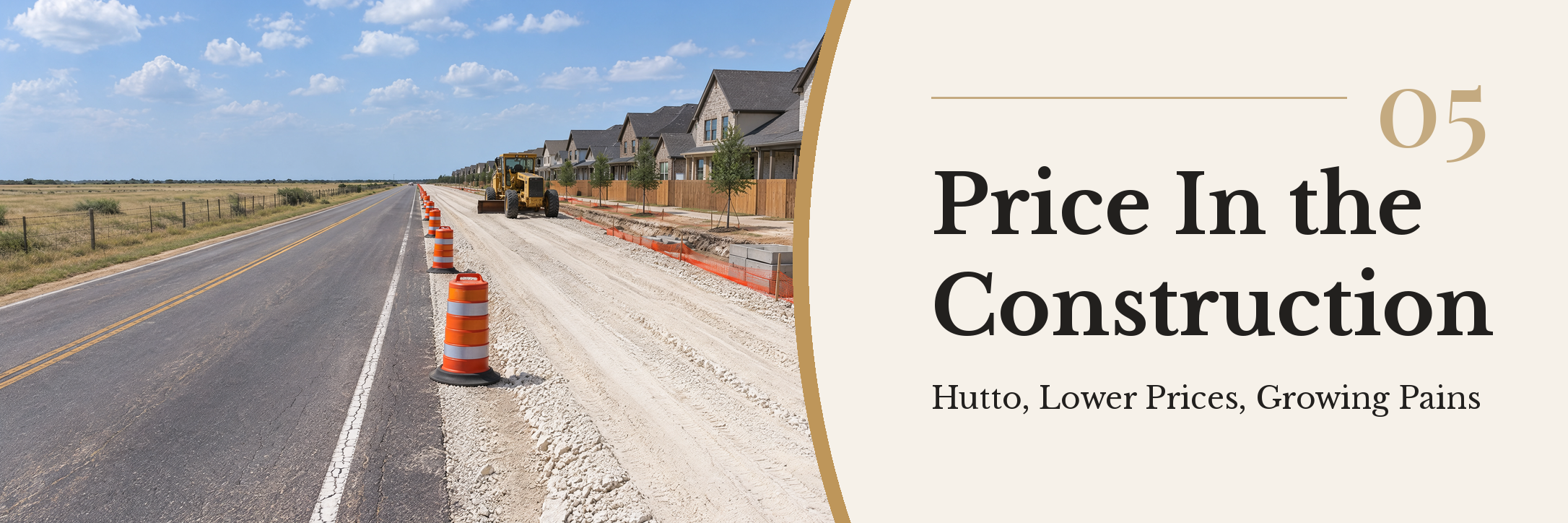
Hutto asks for a different trade-off: you buy into the growth while it's still under construction. Samsung's expansion up the road in Taylor, plus the suppliers and manufacturers following behind it, put Hutto in a good position for value growth over the next 5 to 10 years. As of November 12, 2026, the full production ramp at that facility is still expected in 2027. A corporate investment can help an area grow, but it doesn't guarantee what your home will be worth in the future.
Right now, buying here means torn-up pavement, detour signs, and getting stuck behind trucks with rocks flying off and hitting your car. I've personally gone through 6 tires from nails in active construction zones over 18 months, just on a regular daily commute doing this job. No exaggeration.
Why is getting around Hutto complicated?
Highway 79 splits the city down the middle, with older homes and the rail line on one side and newer construction and shopping on the other. Because that rail line sits right there, crosstown connections get complicated.
Relief is coming from other projects: widening Limmer Loop, extending County Road 132, and building routes that give drivers another way across without waiting on a train. Some of that work is finished, and some is still in design. As of November 12, 2026, the intersection improvements at FM 1660 and Limmer Loop are already built, while the bigger east-west widening of Limmer Loop itself is still moving through the design and early construction phases. That difference gets lost when someone tells you the roads are getting better without saying which project they mean.
What is changing in downtown Hutto?
The Co-Op District is turning old grain facility buildings into shops and event space. A shopping center called Cottonwood Marketplace has been announced near 79 and County Road 132. Announced is the key word. A site plan isn't a grand opening, so treat it as something planned for the future, not something you're moving next to today.
How much do homes cost in Hutto?
As of November 12, 2026, Hutto prices run lower than every other city on this list, generally from the upper 200s into the low to mid 400s, depending on the home. Round Rock and Georgetown are a short drive away for anything you can't find here yet, and an H-E-B Plus is opening by Gattis School Road and 130, so groceries are covered.
A grocery run can still take more time than the map suggests, because you're dealing with a highway, a rail crossing, and active construction along the way. Buy in Hutto today and you get in earlier at lower prices while the infrastructure catches up. That's a trade-off none of the other 4 cities on this list ask you to make.
What should you ask before buying in a North Austin, TX suburb?
Before you hire anybody to help you pick between these 5 suburbs, ask them 3 things:
- What's the drive from this exact lot at 8:00 in the morning, not from the front gate? Drive times usually start at the highway. The stop signs and school zones before it are yours every day.
- Which road projects near here are funded, and which are still just a study or a site plan? Relief that's still on paper won't help your commute for several years.
- What's this house going to cost me every month that isn't on the listing sheet? A toll tag for 2 commuters or a septic contract on an acre lot is a real cost that never gets printed on the listing.
None of these 5 cities is broken. Every regret on this list comes back to the same problem: buying based on the reputation instead of the actual address.
Ready to find the right address, not just the right city? Begin your home search below.
Frequently asked questions
Which North Austin, TX suburb do buyers regret most?
No North Austin, TX suburb is a bad buy, but each one has a trade-off buyers miss. Georgetown has traffic around the square and Wolf Ranch, Leander has highway noise near 183 and 183A, Round Rock is a busy regional hub, Cedar Park runs on tolls, and Hutto is living through construction. Most regret comes from buying the reputation instead of the actual address.
Do you need the toll road if you live in Cedar Park, TX?
If you want the fast route, usually yes. In Cedar Park, TX, the fast way through the Parmer Lane and Whitestone Boulevard bottleneck is the 183 toll, and the free route takes a lot longer at peak hours. Two commuters paying that toll twice a day, 5 days a week, is a recurring cost no listing shows. A free 183A frontage road is projected for full completion around 2029.
Is Leander, TX loud because of the highway?
Some of Leander, TX is, and some of it isn't. US 183 and the 183A toll road run through the city, so lots backing straight up to the road can hear the traffic. Sound walls, grading, and landscaping help, and a lot tucked inside a subdivision away from the road is very different. Stand on the property on a weekday evening before you buy.
Is Hutto, TX cheaper than other North Austin suburbs?
Yes. As of November 12, 2026, Hutto, TX prices generally run from the upper 200s into the low to mid 400s, lower than Georgetown, Leander, Round Rock, or Cedar Park. The trade-off is construction, with Highway 79, a rail crossing, and active road projects like the Limmer Loop widening. Samsung's expansion in nearby Taylor, with full production expected in 2027, puts Hutto in a good position for growth.
What should you ask before buying in a North Austin, TX suburb?
Before buying in a North Austin, TX suburb, ask 3 things. What's the drive from this exact lot at 8 AM, not from the front gate? Which nearby road projects are funded, and which are still a study or a site plan? And what will the house cost every month that isn't on the listing sheet, like a toll tag or a septic contract?