How Do Property Taxes Work in Austin, TX? What Transplants Get Wrong
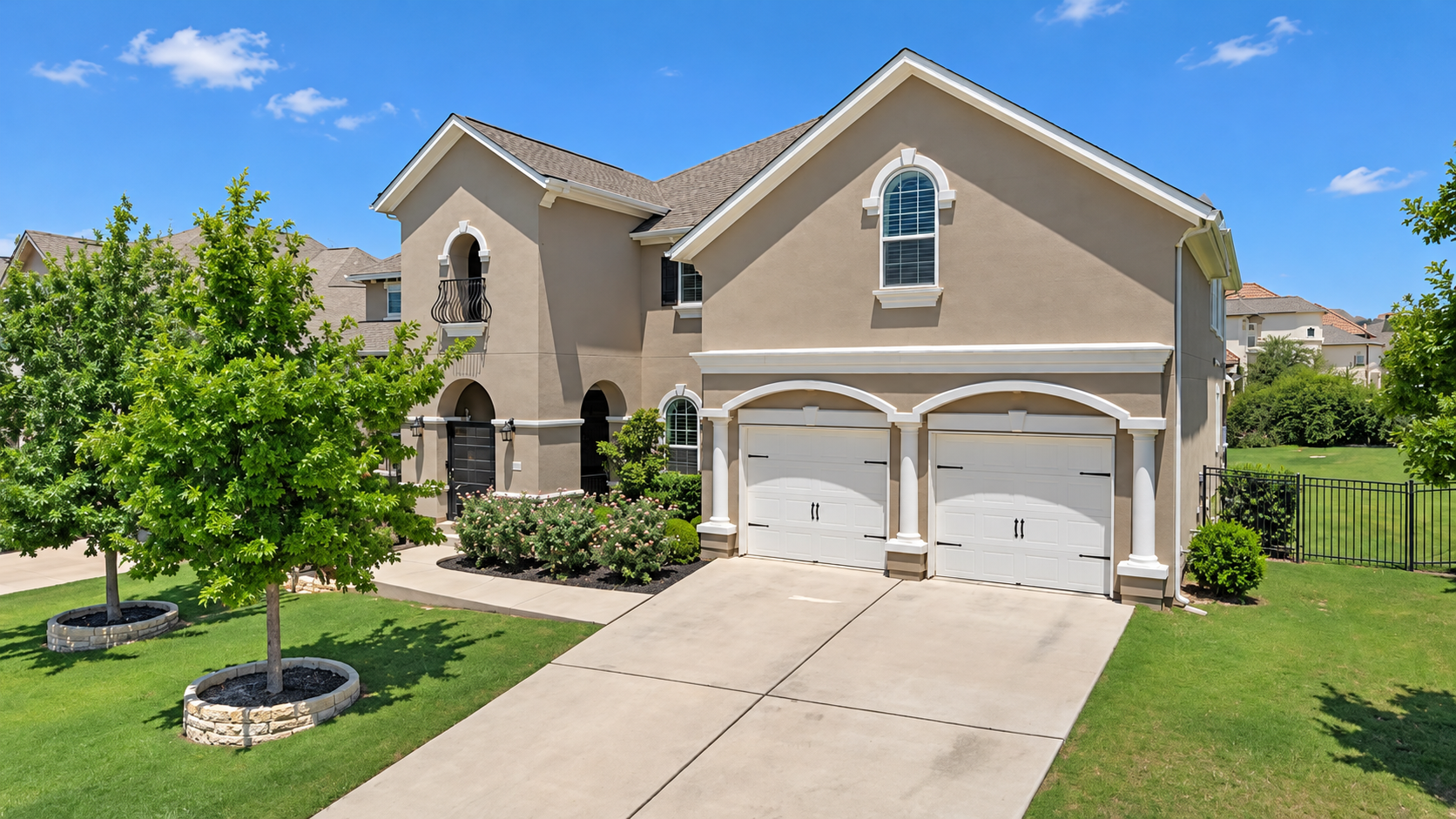
There's no single property tax rate in Austin, TX. Your bill is a stack of separate local rates. So the same house can cost about $1,600 a year more in one town than the next. If "no state income tax" sold you on Texas, here's the catch: Texas still gets paid. It just skips your paycheck and comes for your house every year.
Key takeaways
Your Austin-area tax bill depends on your exact address, not on one metro-wide rate.
The tax number on a listing reflects the seller's caps and exemptions, not what you'll pay.
A MUD in a new subdivision can add about $1,300 to $3,600 a year on a mid-$400s home (as of October 2026).
Texas lets you protest your appraised value every year, and about half of protesters get a lower value.
File your homestead exemption. It lowers your school taxes and turns on the 10% cap.
Why is there no single property tax rate in Austin, TX?
Because your bill isn't one rate. It's a stack of separate governments, each taking a slice.
Your school district sets one rate, your county sets another, and your city adds its own. The community college takes a small piece too. If you're in Travis County, the hospital district gets a cut on top of all that.
Each one sets its rate on its own schedule every fall. Then it all gets stapled together into one big bill. So when someone asks "What's the tax rate in Austin?" the only honest answer is: which street are you talking about?
How much do property taxes differ between Austin suburbs?
Enough to matter. On a home priced in the mid-$400s, the cheap end versus the top end of the north side runs roughly $1,600 to $1,700 a year. That's as of October 2026.
Here's how the combined rates stacked up when I made the video in October 2026. Leander runs closer to $1.90 per $100 of value. Hutto sits around $2. The city of Austin plants itself right at the top.
Same house, same price, same family inside. The only thing that changes is which dot on the map you circle. The address itself carries a price you can't renovate your way out of.
Why does the school district drive most of the difference?
Because when you compare suburb to suburb, almost everything else is a wash.
Round Rock, Hutto, and Leander all pay the same county rate down to the penny. Their city rates land within a few cents of each other. So the school district carries nearly the entire gap.
As of October 2026, Round Rock schools sit around 89 cents per $100, and Hutto tops the group. On a mid-$400s home, Round Rock versus Hutto can mean roughly $1,400 more per year from the school district alone.
The city of Austin is its own creature. It sits in a different county with a lower county rate, but its city rate is way higher and its schools run their own number. That combination is how Austin still ends up on top. Suburb versus suburb, blame the schools. Austin versus a suburb, it's a few things stacked together.
Why is the property tax on a listing not what you'll pay?
Because that number describes the seller's life, not yours.
Texas has a 10% cap that stops your home's taxable value from jumping more than 10% in a single year. But the cap belongs to the owner, not the house. It only exists once you file your homestead exemption, and it doesn't kick in until January 1 of the year after you first qualify. That leaves a gap year with no cap at all.
Say the seller lived there 25 years. Their capped value sits well below what the home is worth. When you buy, that cap expires and the county reappraises the home up toward what you paid. Every exemption the seller had, including a senior exemption, falls off the same way.
If your lender sets your escrow off the listing number, you come up short. About a year later your servicer sends a letter saying your monthly payment is going up by several hundred bucks to cover the shortfall.
Texas reappraises every single year. When I lived in North Carolina, it was only once every four years. I moved from North Carolina, which has a much more moderate property tax rate, and bought near the top of the market in Hutto. I've personally had that "wait, how much am I paying?" moment.
Why does new construction start with such a low tax bill?
Because the county appraises whatever is physically on the lot on January 1.
If your house is still being built that day, that might be a foundation and some studs, or just dirt. So your first tax bill is tiny. Then the county sees a finished house, and the real bill shows up and knocks the wind out of you.
Your first tax bill isn't your forever bill. Plan around the finished-house number, not the first one.
What is a MUD, and how much does it add to your taxes?
A MUD is a separate tax stacked on top of everything else to pay off the bonds that built your neighborhood's roads, water lines, and sewer.
As of October 2026, a MUD can run about 30 to 80 cents per $100 of value. The newest neighborhoods tend to sit at the high end because there's still a lot of new infrastructure to pay off. On a mid-$400s home, that's around $1,300 to $3,600 a year, sometimes more.
That's the twist. A cheap suburb wearing a brand new MUD can cost you more than a pricier town without one. It hits hardest in Leander, Pflugerville, Hutto, and Liberty Hill, where most of the new homes are going up. Samsung's new chip plant in Taylor has that side of the metro exploding with fresh subdivisions, and fresh subdivisions come with fresh MUDs.
The good news is the information is guaranteed to exist. Texas Water Code section 49.452 says the seller has to give you a written notice of the district's rate and its outstanding bond debt before the contract locks in. If they don't, you can walk and take your earnest money with you. So read it before you sign.
You'll also hear about a PID, a public improvement district. It's a different animal with different paperwork, but the problem is the same: another line on the bill you didn't plan for. In a lot of master planned communities, it sits on top of your HOA dues too.
Do you have to tell the county what you paid for your house?
No. Texas is a non-disclosure state, so your sales price isn't public.
Under tax code section 22.27 and government code section 552.149, you're not required to hand your price to the appraisal district just because you bought the house. You'll get an official-looking letter after closing asking you to confirm what you paid. You don't have to answer it, and there's no penalty for leaving it blank.
That means the county's value is an estimate built from listing data, third-party services, and whatever prices homeowners volunteer. And a number somebody guessed at is a number you can argue down.
How do you protest your property tax value in Texas?
You protest the value the county sends you each year. It's one of the most overlooked tools Texas homeowners have.
In Williamson County, people protested around 85,000 accounts in one recent year. That's roughly 31% of every parcel in the county, up from about a quarter a few years back. About half the people who protest end up with a lower value, and the average savings runs around $1,100 a year. Not one time. Every year the value stays down.
Watch the deadline. It's May 15 or 30 days after your notice is mailed, whichever comes later, and it comes back every year. Because it's a non-disclosure state, comparable sales are hard to dig up, and walking into a hearing with the right evidence is a skill, not a Google search.
Your first year matters most. Before your cap switches on, fight your value as low as you can. Whatever number you land on becomes the floor the 10% grows from every year after. Set the base low once and it keeps paying you back as long as you own the place.

What property tax exemptions changed in Texas in 2025?
Two big ones. Texas voters passed both in November 2025.
Proposition 13 passed with about 79% of the vote and raised the homestead exemption for school taxes from $100,000 to $140,000. That's another $40,000 of your home the school district can't tax. Filing your homestead exemption also puts the 10% cap in place, so one piece of paperwork does two jobs.
Proposition 11 added another $60,000 for homeowners who are 65 or older or disabled, bringing their total school tax exemption to $200,000. Disabled veterans can stack their own exemption on top of that, depending on their disability rating.
Never filed? You're not cooked. Texas Tax Code section 11.431 lets you file late. If you qualify, the exemption can be applied retroactively and the taxes you overpaid can be refunded. Go file it.
What happens to your school tax freeze at 65 if you move?
It moves with you, but as a percentage, not a flat dollar amount.
When you hit 65 and file, your school taxes freeze at that year's amount. Rates can climb and your value can climb, and your school tax bill holds where it is.
If your freeze means you're paying, say, a quarter of what the school taxes would otherwise be, you carry that same quarter to the next house. Downsize into something cheaper and your bill drops. Move up into something pricier and the dollars rise, even though the percentage holds. That detail decides whether a downsizing move pencils out, so run it before you list, not after you've signed on the next one.

Frequently asked questions
What is the property tax rate in Austin, TX?
There isn't one single property tax rate in Austin, TX. Your bill stacks rates from your school district, county, city, community college, and in Travis County a hospital district. A MUD or PID can add more. That's why the same house can cost about $1,600 a year more in one Austin-area town than another, as of October 2026. The exact street decides your rate.
Why will my Austin, TX property tax bill be higher than the listing showed?
The listing shows the seller's tax bill, which reflects their 10% cap and exemptions, including any senior exemption. In Texas, those belong to the owner, not the house. When you buy, the cap expires, the county reappraises toward what you paid, and the seller's exemptions fall off. If your escrow is based on the listing number, expect a payment increase about a year later.
How much does a MUD add to property taxes near Austin, TX?
As of October 2026, a MUD near Austin, TX can run about 30 to 80 cents per $100 of value, with the newest neighborhoods at the high end. On a home priced in the mid-$400s, that's around $1,300 to $3,600 a year, sometimes more. Texas Water Code section 49.452 requires the seller to give you a written notice of the rate and bond debt before the contract locks in.
Is it worth protesting my property taxes in Williamson County?
In Williamson County, around 85,000 accounts were protested in one recent year, roughly 31% of parcels. About half the people who protest get a lower valuation, and the average savings runs around $1,100 a year, every year the value stays down. The deadline is May 15 or 30 days after your notice is mailed, whichever is later, and it comes back every year.
What is the Texas homestead exemption for school taxes after 2025?
After Proposition 13 passed in 2025, the Texas homestead exemption for school taxes went from $100,000 to $140,000. Proposition 11 added $60,000 more for homeowners 65 or older or disabled, for a total of $200,000. Filing the homestead exemption also turns on the 10% appraisal cap. Texas Tax Code section 11.431 lets you file late, and overpaid taxes can be refunded.