What Is the Difference Between a MUD and a PID When Buying a House in Texas?
Last updated October 2026
A MUD is a separate taxing district that charges you a property tax rate, with no set end date, to pay for the water, sewer and drainage built for your neighborhood. A PID is a city or county assessment with a fixed amount and a payoff date, billed for a set number of years to pay for things like roads, sidewalks, lighting and landscaping. Both can show up on your property tax bill, both require a written notice from the seller before you sign, and both change your real monthly payment.

Key takeaways
A MUD charges a tax rate per $100 of value, so the bill follows your appraisal.
A PID charges a set assessment, paid in yearly installments, that you can pay off early.
A Texas MUD tax has no set end date, while a PID runs for a fixed number of years.
The seller owes you a written MUD notice and a written PID notice before you sign a binding contract.
If that notice doesn't come in time, Texas law lets you terminate the contract.
What is a MUD in Texas?
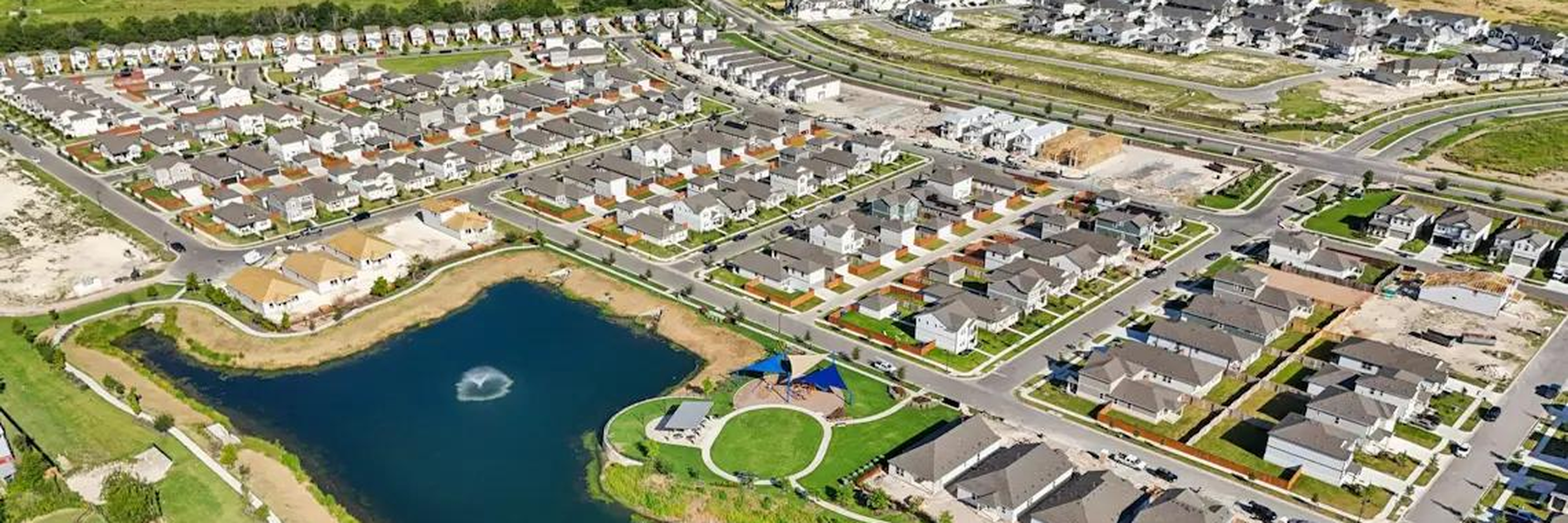
A MUD, or municipal utility district, is a political subdivision of Texas that provides water, sewer, drainage and sometimes recreation to the homes inside its boundaries. It's authorized by the Texas Commission on Environmental Quality, run by an elected board, and usually serves a master-planned community (Texas Real Estate Research Center, July 2024).
The MUD sells bonds to build that infrastructure up front. Then it levies property taxes on the homes in the district to pay the bonds back. Texas law lets a MUD issue an unlimited amount of bonds, and its taxes have no set end date (Texas Real Estate Research Center, November 2021).
What is a PID in Texas?

A PID, or public improvement district, is created by a city under Chapter 372 of the Texas Local Government Code or by a county under Chapter 382. It pays for improvements like sidewalks, roads, lighting and landscaping, and its bonds are repaid through special assessments on the property in the district (Texas Real Estate Research Center, November 2021).
A PID assessment has a fixed amount and a fixed repayment timeline. You can pay it in full at any time, or pay it in annual installments that can change from year to year. The city council or county commissioners court approves each year's installments in an annual service plan update (Texas Property Code Section 5.014).
How is a MUD tax different from a PID assessment?
The short version: a MUD is a rate, and a PID is a balance.
How it's charged. MUD: a tax rate per $100 of appraised value. PID: an assessment levied on your property, paid in annual installments.
Who runs it. MUD: an elected district board, under TCEQ. PID: the city council or county commissioners court.
How long it lasts. MUD: no set end date. PID: a set number of years, with a final installment year.
Can you pay it off? MUD: there's no payoff balance, because it's a tax rate charged each year. PID: yes, in full at any time.
What does a MUD cost on an Austin-area house?
Here's a real one. Williamson County MUD No. 19B adopted a total tax rate of $0.8276 per $100 of value for 2025 and proposed the same $0.8276 for 2026, per its tax rate worksheet dated July 25, 2026. Of that 2026 rate, $0.6210 goes to paying down the district's debt (Williamson County).
On a $400,000 taxable value, $0.8276 per $100 comes to $3,310 a year, or about $276 a month. That's on top of your city, county and school district taxes. To run any house, divide the taxable value by 100 and multiply by the MUD rate.
What does a PID cost on an Austin-area house?

Look at Leander's Deerbrooke PID. Under its 2026 service and assessment plan update dated September 3, 2026, a 50-foot lot in the South Improvement Area owes an annual installment of $1,307.20 for tax year 2026, with an outstanding balance of $14,505.50. A 40-foot lot in the North Improvement Area owes $1,001.17 (City of Leander).
That 50-foot lot works out to about $109 a month. Deerbrooke's installments run through tax year 2046, so unless you pay off the balance, that line stays on the bill for years.
How do I find out if a house is in a MUD or a PID?

Start with the seller's notices. Texas requires a seller to give you a written MUD notice before you sign a binding contract (Texas Water Code Section 49.452), and a written PID notice before the contract too (Texas Property Code Section 5.014).
Don't expect the PID notice to show your dollar amount. It usually leaves out the assessment amount and payment schedule unless the seller, city or county adds them (Texas Real Estate Research Center, November 2021). Get the current figure from the city or county. In Leander, PID assessments appear on the property's consolidated tax bill from the Williamson County or Travis County tax office (City of Leander).
What happens if the seller doesn't give me the MUD or PID notice?
You can walk away. If the MUD notice isn't given before you sign a binding contract, Texas law says you're entitled to terminate. If you get it at or before closing and close anyway, you've waived that right (Texas Water Code Section 49.452).
For a PID, a buyer who didn't get the notice before the contract can terminate and recover earnest money any time before closing. After closing, the law allows a suit for damages, including up to $5,000 plus reasonable attorney's fees (Texas Real Estate Research Center, November 2021). The MUD statute carries the same $5,000 cap. This is general information, not legal advice, so talk to a Texas real estate attorney about your own contract.
Is a MUD or a PID a deal breaker?
Not on its own. The real question is whether the monthly payment still works once the MUD tax or PID installment is in it.
A $3,310 MUD bill and a $1,307 PID installment are both real money, and neither one is in the list price. Get both numbers in writing before you make an offer, then decide.
Frequently asked questions
Can I pay off a PID assessment early in Texas?
Yes. In Texas, a PID assessment can be paid in full at any time, according to the notice required by Texas Property Code Section 5.014. If you don't pay it off, it's due in annual installments that can change each year. In Leander's Deerbrooke PID, a 50-foot South Improvement Area lot had an outstanding balance of $14,505.50 under the September 3, 2026 plan update.
Does a MUD tax ever end in Texas?
A Texas MUD tax has no set end date. The Texas Real Estate Research Center notes that a MUD can issue an unlimited amount of bonds and levy taxes to repay them with no fixed end. That's the key difference from a PID, which is levied for a set number of years with a fixed amount and timeline. Check the district's current rate before you buy.
Where do MUD and PID charges show up for a Texas home?
In Texas, MUD taxes and PID assessments can both appear on a home's property tax bill. In Leander, the city says PID assessments are collected on the consolidated tax bill from the Williamson County or Travis County tax office, with no separate city bill. For the current PID amount, ask the city or county, since the seller's PID notice usually won't list it.
Do Texas sellers have to disclose a MUD or a PID?
Yes. Texas sellers must give buyers a written MUD notice before a binding contract under Texas Water Code Section 49.452, and a written PID notice before the contract under Texas Property Code Section 5.014. If the MUD notice isn't given before the contract, the buyer is entitled to terminate. A buyer who didn't get the PID notice before the contract can terminate and recover earnest money before closing.