What Should I Ask a Builder Before Buying New Construction in Texas?
Last updated October 2026
Before you sign with a Texas builder, ask five things: whose contract you're signing, what the written warranty covers and for how long, whether your own inspector can check the house before the drywall goes up, how disputes get settled, and what the MUD, PID and HOA costs are. Texas has had no state-run new home warranty since September 1, 2009, so the builder's contract and warranty are most of your protection.
New doesn't mean finished being checked. A brand new house can still have a bad drain line or a missing beam strap, and the paperwork decides who pays to fix it.

Key takeaways
Texas dropped its statutory new home warranties when the Texas Residential Construction Commission's authority ended on September 1, 2009.
Ask for the warranty in writing. A builder warranty that hits 1 year on workmanship, 2 years on systems and 6 years on structure cuts your window to sue from 10 years to 6.
A builder's arbitration clause can bind you, and the Texas Supreme Court held in May 2023 that it can bind the next owner too.
If the home sits in a PID, the seller has to hand you a PID notice before you sign a binding contract.
As of March 2026, most new construction listings in Hutto, Georgetown, Liberty Hill and Kyle had taken a price cut.
Whose contract am I signing?
Ask whether it's a TREC form or the builder's own contract, and get a copy before you pick finishes. The Texas Real Estate Commission publishes two New Home Contract forms, one for incomplete construction and one for completed construction.
If the builder hands you its own contract, read it like it was written by the other side. It was. Ask what happens to your earnest money if the build runs late, if you can't close, or if the builder changes the plan.
Get every promise from the sales office written into the contract. If it isn't in the contract, plan on not getting it.
What warranty does the builder give, in writing?
Ask for the written warranty itself, not a brochure about it. Texas doesn't hand you one anymore. When the Texas Residential Construction Commission's regulatory authority ended on September 1, 2009, the state's limited statutory warranties and building performance standards ended with it. What's left are the common-law implied warranties of good workmanship and habitability.
Here's the question that matters most. Does the written warranty cover at least 1 year for workmanship and materials, 2 years for plumbing, electrical, heating and air-conditioning delivery systems, and 6 years for major structural components?
Those are the exact terms in House Bill 2024, passed in 2023. A builder who gives that warranty gets a 6 year deadline on construction defect lawsuits instead of the usual 10. Know which deal you're getting.
Can I bring my own inspector, and when?
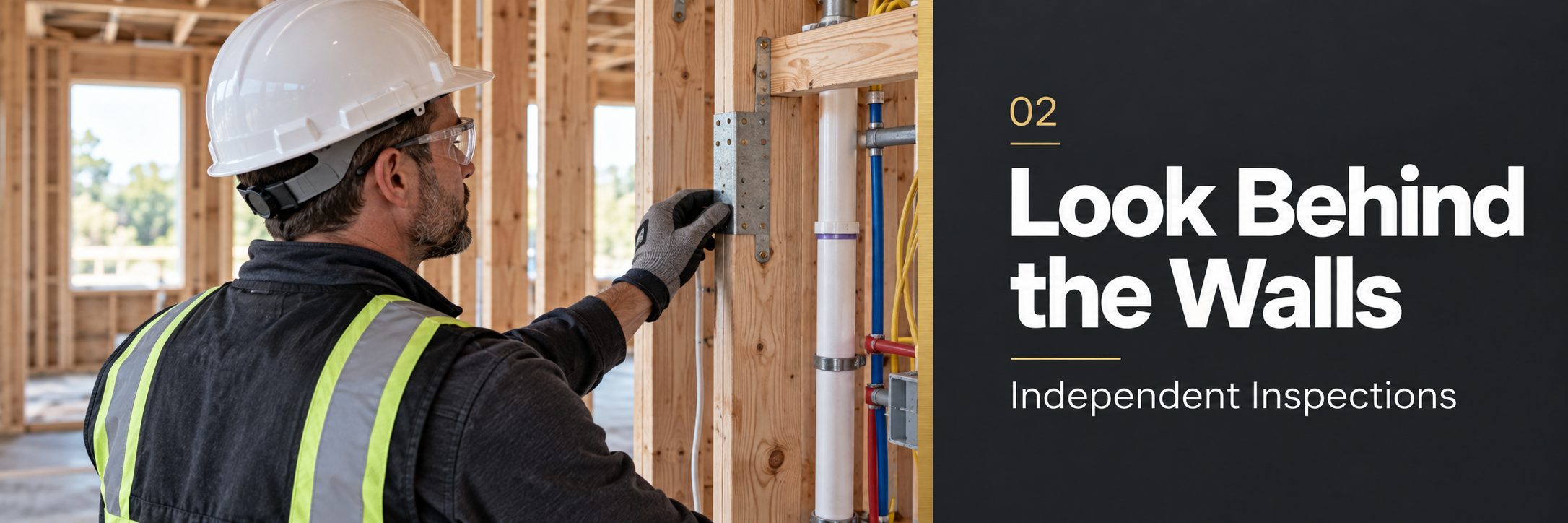
Ask the builder in writing whether your inspector can walk the house before the drywall goes up and again before closing. Once the walls close, you can't see the framing, the plumbing or the wiring without tearing into it.
Hire a Texas licensed inspector. TREC's License Holder search lets you check an inspector's license and disciplinary history before you hire. TREC's standards of practice apply to substantially completed property, so ask a pre-drywall inspector exactly what their visit covers.
What happens if something's wrong after I close?
Ask how defect claims get handled: the warranty claim process, and whether the contract sends disputes to binding arbitration. Read that clause before you sign, not after the foundation cracks.
Arbitration clauses stick. In Lennar Homes of Texas v. Whiteley, decided May 12, 2023, the Texas Supreme Court held that a later buyer of a home was bound by the arbitration clause in the original buyer's purchase agreement.
Texas also has a set process before you can sue a builder over a construction defect. Under the Residential Construction Liability Act in Chapter 27 of the Property Code, you send written notice by certified mail at least 60 days before filing. The builder can ask to inspect within 35 days and has 45 days from your notice to make a written settlement offer.
Is the home in a MUD or PID, and what will it cost me every year?

Ask for the MUD and PID details and the yearly dollar amount before you sign. Both can add real money to your payment for years.
If the home is in a public improvement district, the seller must give you the PID notice before you sign a binding contract. If that notice wasn't given in time, you can terminate and get your earnest money back any time before closing. The catch: the notice doesn't have to state the assessment amount, so ask for the number directly.
If the home is in a municipal utility district, the Texas Water Code requires a written MUD notice before you sign, and it shows the district's tax rate.
Are the incentives tied to the builder's lender or title company?

Ask whether the incentive depends on using the builder's lender or title company, and get it in writing either way. Then get a quote from an outside lender and compare the full cost, not just the rate.
Federal RESPA rules help you here. Anyone referring you to an affiliated lender or title company has to give you a written disclosure of that relationship at the time of the referral, and they can't require you to use that provider.
Is the builder's price negotiable?
Ask what incentives and price reductions are available on the specific home you want. Around Austin, the sticker price has been moving. As of March 12, 2026, 71.6% of new construction listings in Hutto had a price reduction, along with 69.1% in Georgetown, 66.7% in Liberty Hill and 66.5% in Kyle.
New construction made up 27.3% of the Austin area's active listings on that same date. That's a lot of finished and half-finished inventory competing for you.
Frequently asked questions
What is the most important question to ask a Texas builder?
Ask for the written warranty and what it covers. Texas ended its state new home warranties on September 1, 2009, so a Texas buyer's protection on new construction comes mostly from the builder's contract and warranty. Look for at least 1 year on workmanship and materials, 2 years on plumbing, electrical and HVAC delivery systems, and 6 years on major structural components.
Can I use my own inspector on a new build in Texas?
Yes, if the contract allows it, so ask the builder in writing before you sign. On Texas new construction, the most useful visits are before the drywall goes up and again before closing. Use TREC's License Holder search to confirm a Texas inspector's license and check for any disciplinary history before you hire.
Do Texas builder contracts require arbitration?
Some do, so read your contract for a binding arbitration clause before signing. In Texas, those clauses carry weight. The Texas Supreme Court held on May 12, 2023, in Lennar Homes of Texas v. Whiteley, that a later buyer of a home was bound by the arbitration clause in the original buyer's purchase agreement with the builder.
What should I ask a Texas builder about a PID?
Ask whether the home is in a public improvement district and what the yearly assessment is in dollars. Texas sellers must give buyers a PID notice before a binding contract is signed, and a buyer who didn't get it in time can terminate before closing and recover earnest money. The notice doesn't have to list the assessment amount, so ask for it.