Yes, Austin housing inventory is shrinking, but it doesn't mean what most sellers think. As of October 2026, months of inventory inside the city of Austin is down to about 4.6, yet sales fell right along with supply, so buyers actually have leverage they didn't have 6 months ago.
Here's the part the headline leaves out. I ran one price range in one suburb right outside of Austin and found 135 homes for sale and only 2 under contract. Price your home off the headline and you're going to sit. Read it right, and you'll know exactly who's holding the cards.

Key takeaways
- As of October 2026, months of inventory in the city of Austin is about 4.6, down from about 5.4 a year earlier, because fewer people are listing and fewer are buying.
- Months of inventory is a ratio, so always check how many similar homes actually went under contract last month.
- The average 30-year mortgage rate was around 7.4% in mid-October 2026, after 7 straight weekly increases.
- Across the Austin area, more than 57% of homes for sale have had a price drop, and the average home sold for about 93% of its original asking price.
- Georgetown is the place to shop as a buyer right now, while Round Rock sellers still have a little room to breathe.
Why is housing inventory shrinking inside the city of Austin?
Mostly because fewer people are listing, not because more people are buying. As of October 2026, months of inventory inside the city is down to about 4.6, almost a month lower than the roughly 5.4 it was this time last year. The number of homes for sale in the city dropped about 14.5% from last year.
Just a year ago, the city was going the opposite direction, with inventory climbing pretty fast. It's been tightening since spring, so this isn't a surprise. But sales fell right along with supply.
Over a recent month, closings in the city ran about 20% behind the same stretch last year. Single-family homes going under contract in the city in September 2026 were down by double digits compared to last September. Fewer people listing and fewer people buying means the ratio looks better than the market actually feels.
That's why prices inside the city haven't turned around yet. The typical home that sold in the city in August 2026 went for around $560,000, still well below where it was a year ago. And more than half the homes for sale in the city have already taken a price cut.
What does months of inventory actually mean?
It's homes for sale divided by how fast homes are selling. So it can drop because fewer people are listing or because more people are buying, and those are two very different markets.
Every time I sit down at a listing appointment, I give people 2 definitions of the same number. One is math, the other is reality.
The math version: if every home kept selling at today's pace and nothing new came on the market, how many months until it's all gone? The general rule mostly everyone uses:
- 0 to 3 months: a seller's market
- 3 to 6 months: balanced
- 6 months and up: buyers have the leverage
It's not this cleanly cut, but it works pretty well.
The practical version is the one that matters when you're selling. Whatever that number is, that's roughly how many other homes every buyer is comparing your home to. At 3 months, the person walking through your house is probably looking at about 3 other homes just like it.
So ask yourself this. If you spend money marketing your house and it's priced wrong, are you just helping your neighbors sell theirs? The answer is yes. That's exactly what you're doing.
What does a buyer's market look like on the ground?
It looks like 135 homes for sale and only 2 under contract. I was meeting with a seller thinking about selling his home in Pflugerville. His home was about 2,900 square feet, so we searched single-family resale only, no new builds, between about 2,500 and 3,200 square feet.
That's the kind of listing that sits when buyers get cautious. In that range, 11 homes had sold the month before, and then interest rates went up. The math version says that size range is sitting around 12 months of inventory. That's already a buyer's market.
The practical version is worse. If only 2 homes go under contract a month, you're looking at 5 to 6 years to sell through that pile. It's the most buyer's market a buyer's market can be. A buyer shopping that range holds nearly all the cards.
If you're a seller in a range like that, pricing a little high to leave room is how you end up on the market until it's time for another spring cleaning.
Why look at pending sales instead of closed sales?
Because pendings tell you what buyers are buying right now. A closing today usually reflects a contract that got signed a month or 2 ago, give or take. I find what's under contract way more reliable.
Right now, a lot of what's for sale is just sitting there hoping a buyer comes in. For some perspective across the area, most listings have been on the market for more than a month.
Why did the wider Austin metro tighten up too?
For almost the opposite reason: buyers showed up. As of October 2026, the number of homes for sale across the greater Austin area is pretty much flat compared to last year, under 2%. It peaked back in mid-July, and listings have eased off a little since then.
Months of inventory across the area still came down to about 5.75 in early September 2026. With the same number of homes for sale, the only way that ratio drops is if more of them sell, and sell they did. So far this year, closings across the area ran about 6.4% ahead of last year and well above the long-run average for that stretch.
So the city tightened because sellers stayed home, while the metro tightened because buyers showed up. Same headline, different directions. It helps that fewer people are listing, too: new listings across the metro in August 2026 were down about 7% from last year.
What happened to Austin home sales in September 2026?
September broke the streak. Closings for the month came in about 10% below last September, the first clear miss after a spring and summer of beating last year.
The suburbs slowed down even harder than the city. Places like Leander and Georgetown saw closings drop by more than a third. The contracts in the pipeline are running behind last year too, which points to October and November closings coming in light as well.
How are mortgage rates changing the Austin market?
Rates are the number that moved more than anybody expected, and they're the main reason September cracked. In the last week of February 2026, the average 30-year mortgage rate dipped to about 5.98%, the lowest in three and a half years. Buyers came running back, and Austin got a taste of the old frenzy.
I had a home sale with no inspection, a waived appraisal, and an offer over asking. Financed deals were closing in 9 days. To be honest, I was a bit shocked, because that's the stuff we hadn't seen since the pandemic.
It didn't last long. When the war in Iran kicked off, oil shot past $100 a barrel, inflation fears came back, and rates went with them. By the end of March 2026, the 30-year rate was back up to 6.4%, and the market kind of hit pause. Over the summer, people shrugged it off and homes started selling again.
Then September happened. The Fed raised its key rate in the middle of the month, its first hike in about 3 years, and most Fed officials expect another one before the year is out.
As of mid-October 2026, mortgage rates had climbed every single week since late August. That's 7 straight weekly increases, with the average 30-year rate sitting around 7.4%. I've had clients who were getting quoted in the sixes earlier this year come back with quotes north of seven.
Did forecasters see higher rates coming?
No, this caught them flat-footed too. At the start of the year, Fannie Mae was expecting rates closer to 6%, and it has bumped that up several times since. Its latest forecast has rates averaging about 6.8% for the rest of this year, and as of October 2026 we're already well beyond that.
The Fed isn't promising relief either. Its own projections don't show it cutting rates anytime soon.
How do higher rates push inventory back up?
Higher rates mean fewer buyers can actually qualify. Homes sell slower, and when homes sell slower, months of inventory goes up, even if nobody new lists a thing. That's the mechanism most likely to push inventory back up from here.
Where does Austin housing inventory go from here?
It depends on rates, so here are both versions. If rates come down in a real way, a lot of sellers who've been sitting on the sidelines are going to list, and they're going to list fast. Inventory builds back up, but from new supply this time.
If rates stay where they are, sales keep slowing, and inventory climbs because homes just sit longer, like what's already been happening to an extent.
Either way, my read is that this shrinking inventory is more of a window than the new normal. With rates above 7%, the slower sales coming next are exactly what fills inventory back up, likely before spring. And if you're a buyer, that window has some real perks.
What leverage do Austin home buyers have right now?
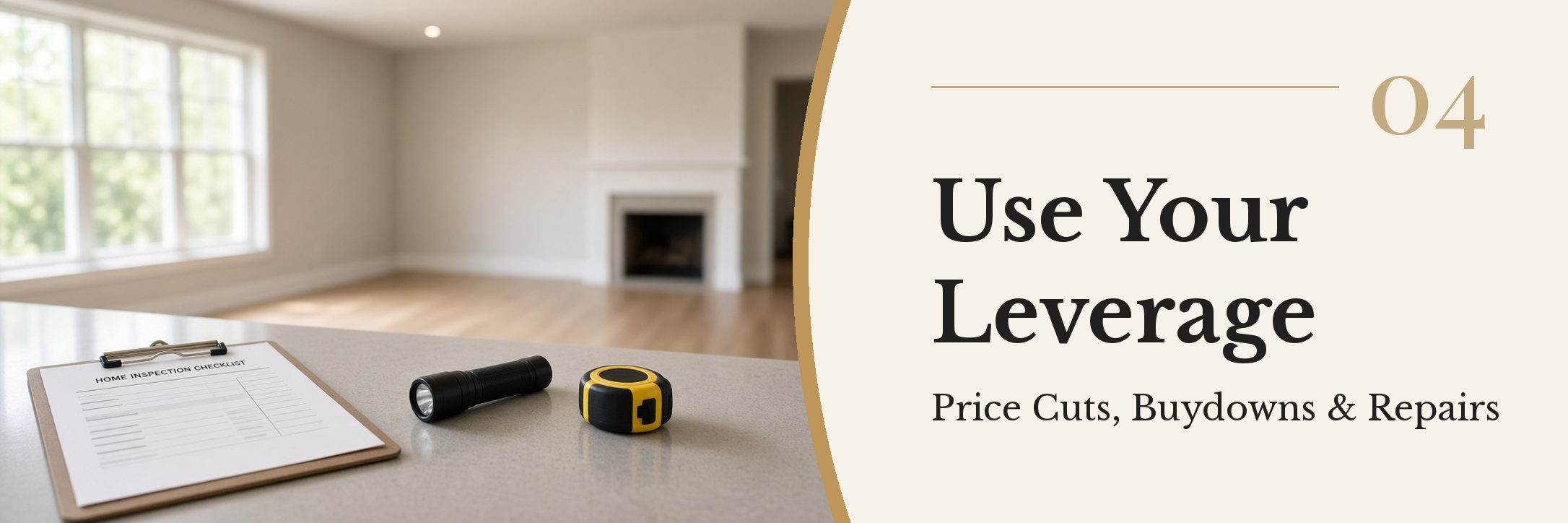
More than they've had in a while. Higher rates sound like terrible news for buyers, but nobody likes to admit that they also hand you leverage you didn't have 6 months ago. When buyers back off, sellers get flexible.
As of October 2026, across the Austin area:
- More than 57% of the homes for sale have already had a price drop.
- The average home has been selling for about 93% of its original asking price, so there's room to negotiate, and sellers know it.
- The median sold price is down roughly a quarter from the 2022 peak.
My take is pretty simple. Yes, you might take on a higher rate than you'd like, but you're buying at a lower price, which means a lower loan balance. When rates come down, you can refinance into the lower rate and keep the lower principal.
Just know that refinance isn't guaranteed. Rates have to actually drop, and refinancing has its own costs. Don't buy a house you can only afford if rates fall. I don't recommend it. Don't do it.
How do rate buydowns work in Austin?
On a typical Austin loan, somewhere around $10,000 to $15,000 can buy your rate down about a full point. With rates where they are, that could pull you out of the sevens and back into the sixes, and a lot of sellers and builders are willing to put that money on the table for you right now.
One thing to ask: is it a temporary buydown, or a permanent buydown that lasts for 30 years? That's a big difference. It's the difference between a rate you keep and a payment that jumps on you later.
Can buyers ask for repairs again?
Yes. Inspection requests are back on the table, along with repairs before closing and even repairs before you make an offer. That's stuff buyers had to waive a couple of years ago just to get in the room.
New construction makes up roughly a quarter of everything for sale across the area. Builders have the flashy incentives, and they can afford buydowns most regular sellers can't. But resale is where you get the real leverage. Those sellers know they're up against everybody, including the builder down the street.
Is Georgetown or Round Rock better for buyers right now?
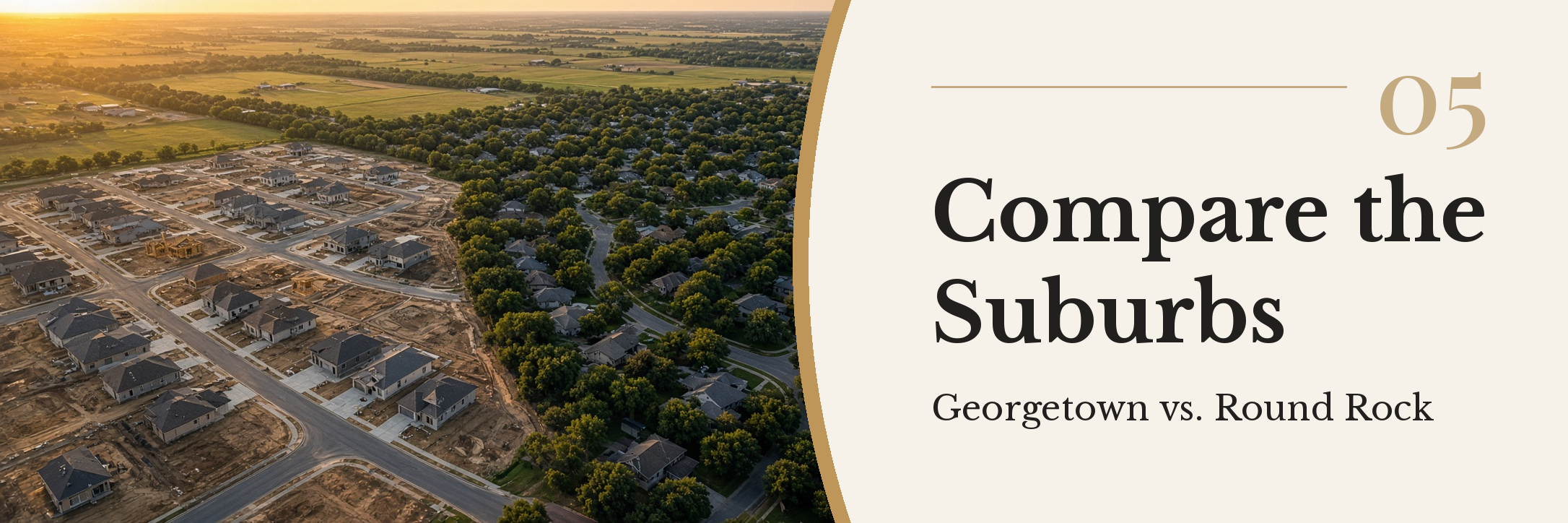
If you're a buyer, Georgetown is the place to go shopping with some attitude. If you're a seller, Round Rock is where you'd rather be. Two north side suburbs right next to each other could not be more different right now.
Why do Georgetown buyers have so much leverage?
Earlier this year, Georgetown was carrying about 6.3 months of supply, which is buyer territory, with over 1,000 homes for sale. It hasn't gotten any tighter. As of late September 2026, Georgetown had more homes for sale than any other suburb, and 64.7% of those listings had already taken a price cut.
A big reason is new construction. Georgetown is one of the biggest new-build areas in Central Texas, with places like Wolf Ranch and Sun City adding homes all the time. Builders there are cutting prices and buying down rates to move inventory, and that puts pressure on every resale seller nearby.
So if you're buying in Georgetown, you can push. Ask for a buydown, ask for the repairs, ask for the price.
Why is Round Rock different?
Round Rock is mostly built out, so most of what's for sale is resale. As of October 2026, it's sitting at about 4.5 months of inventory, tighter than the metro. That's looser than April, when it was closer to 4 months, so even Round Rock is drifting toward buyers, just slower than everybody else.
Only about 1 in 6 homes for sale there is a builder listing, so resale sellers aren't up against a wall of new construction with incentives attached. That doesn't mean Round Rock sellers can name their price. More than half of the listings there are still below their original asking price, and prices are down a little from last year. There's just less of a builder overhang dragging things down.
What should you ask before you buy a home in Austin right now?
Ask whoever is helping you buy these 3 questions before you make an offer:
- How many homes like this are for sale right now, and how many actually went under contract last month? Months of inventory is just a ratio. The pendings tell you who's holding the cards.
- Is the buydown permanent, or does it disappear after a year or 2? That's the difference between a rate you keep and a payment that jumps on you later.
- What are sellers around here actually agreeing to on repairs and credits right now? Inspection asks are back on the table, and you can't push for something you don't know is normal.
Straight up, buyers shopping resale have the edge, most of all in Georgetown, while Round Rock sellers still have a little room to breathe. This read is good for a few months. Rates are moving every week and the forecasts keep getting rewritten, so check the numbers again before you make a move.
Ready to see which side of that line your next neighborhood falls on? Begin your home search below.
Frequently asked questions
Is housing inventory shrinking in Austin, TX?
Yes, but not for the reason sellers hope. As of October 2026, months of inventory inside the city of Austin, TX was down to about 4.6 from about 5.4 a year earlier, and homes for sale were down about 14.5%. Sales fell right along with supply, though, so the market feels softer than the ratio looks, and city prices haven't turned around yet.
Is Austin, TX a buyer's or seller's market right now?
As of October 2026, the Austin, TX area leans toward buyers. More than 57% of homes for sale across the area had a price drop, the average home sold for about 93% of its original asking price, and mortgage rates sat around 7.4%. It varies a lot by price range and suburb, so check how many similar homes went under contract last month.
What does months of inventory mean in Austin, TX?
Months of inventory is homes for sale divided by how fast homes are selling. The general rule used for Austin, TX: 0 to 3 months is a seller's market, 3 to 6 is balanced, and 6 and up gives buyers the leverage. In practice, the number is roughly how many similar homes a buyer is comparing yours to, so a 3-month market means about 3 competing homes.
How much does a rate buydown cost in Austin, TX?
As of October 2026, on a typical Austin, TX loan, somewhere around $10,000 to $15,000 can buy your rate down about a full point. With rates around 7.4%, that could pull you out of the sevens and back into the sixes, and many sellers and builders will put that money on the table. Ask whether the buydown is temporary or permanent for 30 years.
Is Georgetown or Round Rock better for buyers right now?
As of October 2026, Georgetown, TX favors buyers more than Round Rock. As of late September, Georgetown had more homes for sale than any other Austin suburb and 64.7% of its listings had taken a price cut, with heavy new construction adding pressure. Round Rock was at about 4.5 months of inventory, mostly resale, so its sellers had a little more room.